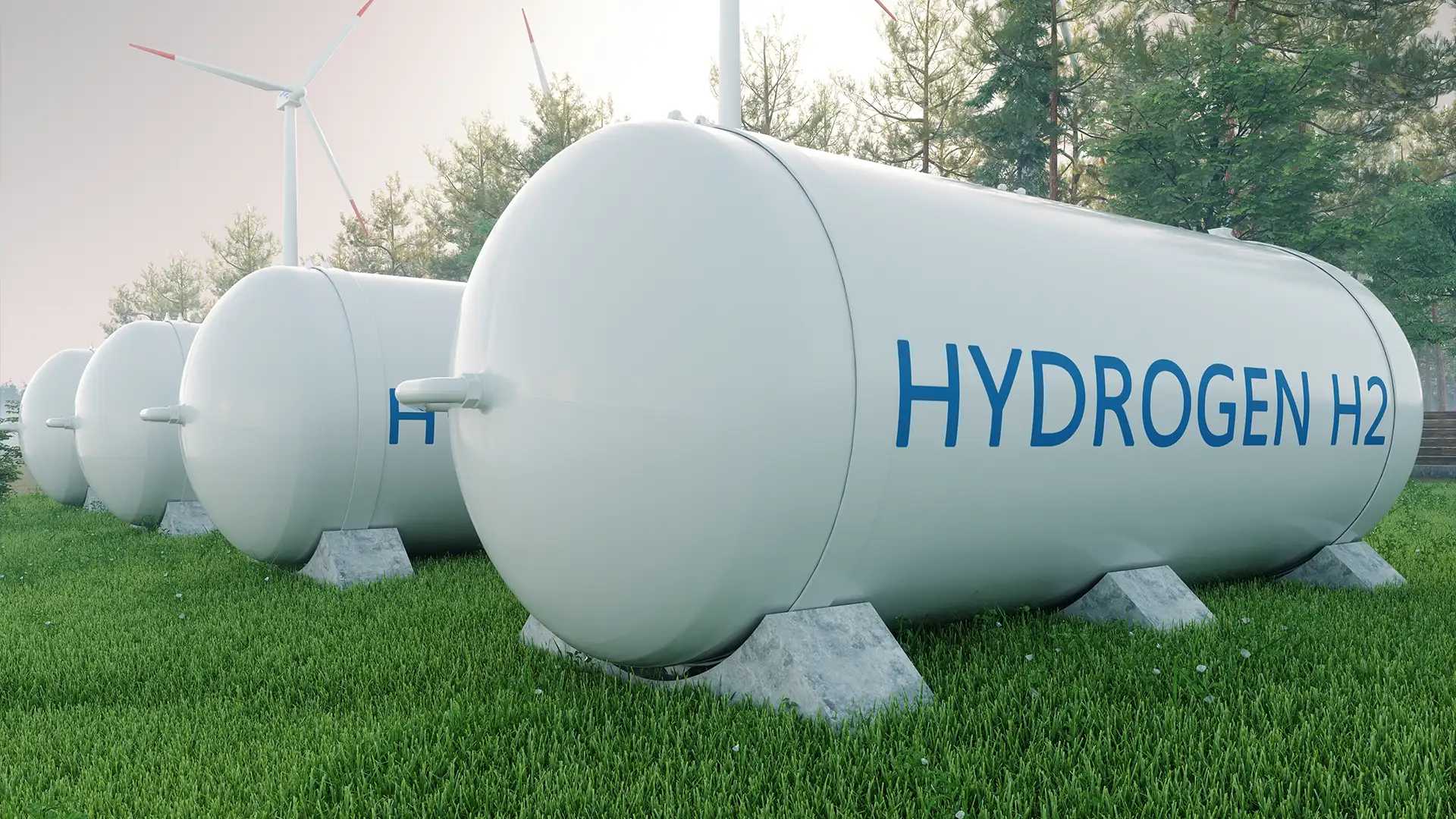
Hydrogen
Hydrogen essential driver for energy transition
Share
Hydrogen is an essential energy driver to reach European carbon neutrality targets of 2050
Edison's positioning

Hydrogen plays a sinergic role in Edison's value chain
Edison’s value chain as at present well established in our offer and tied with a vast in-house knowledge of the sector. Hydrogen branch is complementary to Edison's core business, and is equipped with a teams of experts, top-notch knowledge and research.
Hydrogen is synergic to the company's development plan
Edison's development plan is in full accord with national Integrated National Energy and Climate Plan (i.e. PNIEC), National Plan for Recovery and Resilience (PNRR), and the all the objectives set by the European Green Deal.
Our projects

Puglia Green Hydrogen Valley
The Puglia Green Hydrogen Valley is one of the first large-scale green hydrogen production initiatives in Europe and involves the construction of two plants in Brindisi and Taranto, with a total electrolysis capacity of 160 MW. Once operational, the Puglia Green Hydrogen Valley plants are expected to produce approximately 250 million cubic meters of green hydrogen per year.
The project, currently under development by Edison, Sosteneo, and Saipem, has been selected for IPCEI (Important Projects of Common European Interest) funding, with a maximum amount of €370 million, confirming its strategic relevance and feasibility.
H2 Factory®
Iris Ceramica Group, a global leader in the production of innovative solutions and large-format high-end technical ceramic slabs for the design, furniture, and architecture sectors, has chosen Edison NEXT to develop a decarbonization pathway through green hydrogen.
The agreement involves the development, at the new plant in Castellarano, in the province of Reggio Emilia, of H2 Factory®, the world’s first ceramic factory designed to be powered 100% by green hydrogen by 2030. In May 2024, the testing phase was launched, leading to the production of the world’s first ceramic slab made using green hydrogen.
JRP (Joint Research Platform) Hydrogen of the Politecnico di Milano
It is a joint research platform between universities and companies, aimed at deepening topics related to hydrogen and the contribution it can make to the ongoing energy transition. It was created in 2021 by the Fondazione Politecnico di Milano together with the Politecnico di Milano and founding partners Edison, Eni, Snam, A2A, and NextChem (part of the Maire Tecnimont group); today, the industrial partnership has expanded to include other companies. Based on the premise that hydrogen will be the carrier that complements renewable electricity in the transition toward a zero-emission economy, JRP aims to contribute to the creation of a national hydrogen supply chain. Additionally, JRP seeks to develop so-called “vertical” research projects, focused on specific technologies or applications related to the hydrogen world, helping to increase awareness of hydrogen’s potential in the context of the energy transition.
The SPIRIT project and the potential of turquoise hydrogen
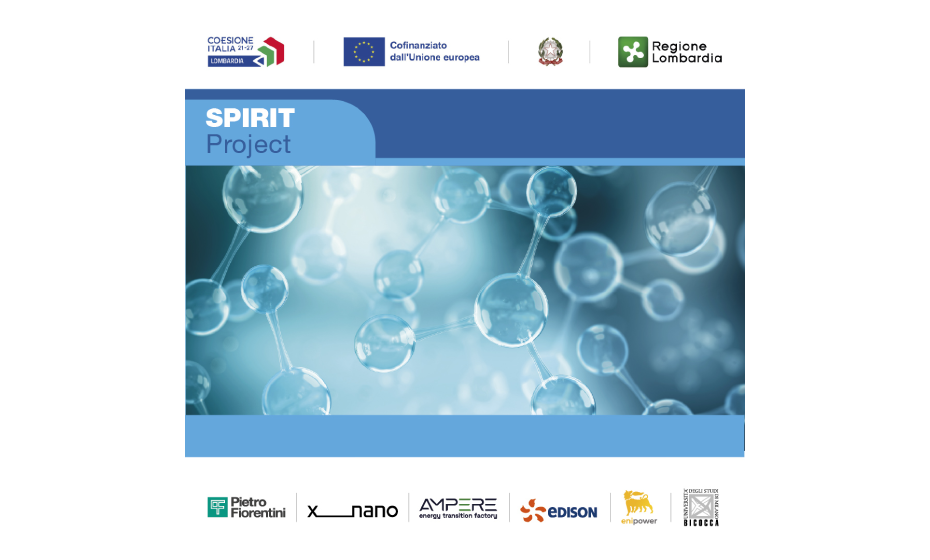
SPIRIT (Sustainable Innovative and Revolutionary Production of Turquoise Hydrogen) was launched with the aim of developing and validating, on a pre-industrial scale, an innovative technology for the production of turquoise hydrogen and solid carbon via methane pyrolysis. The project forms part of the broader energy transition, offering a concrete response to the challenges of decarbonising hard-to-abate industrial sectors. The project is worth 4 million euros and has been positively evaluated by the Lombardy Region through the Collaborate & Innovate Measure and involves Pietro Fiorentini, X-nano, Enipower, Edison, Ampere Transition, and the University of Milan-Bicocca.
Hydrogen research activities
Edison’s hydrogen research activities are focused, on one hand, on in-depth studies and investigations targeting short-term applications, and on the other, on the analysis and evaluation of more innovative technologies. The main activity consists of technology scouting, which involves deep dives into available literature and dedicated meetings with developers. Alongside this, there is also an experimental component aimed at obtaining first-hand information on technologies identified as particularly promising. This is the context for the work carried out in the hydrogen laboratory located within the Officine Edison in Turin, which currently hosts two test stations for innovative small-scale electrolyzers. The goal of the experimentation is to characterize the technologies under testing, with a focus on the aspects most relevant for potential future industrial applications.
Types of hydrogen

Green
“Green” hydrogen is extracted from water using electricity generated by a plant powered by renewable sources, such as hydroelectric, solar, or photovoltaic energy.

Blue
“Blue” hydrogen refers to hydrogen extracted from hydrocarbons where the carbon dioxide produced in the process is not released into the atmosphere but instead captured and stored. This is considered the best option to support the transition toward green hydrogen.
Grey
More than 90% of the hydrogen produced today comes from this type of process; it can be a by-product of a chemical reaction or can be extracted from methane or other hydrocarbons.