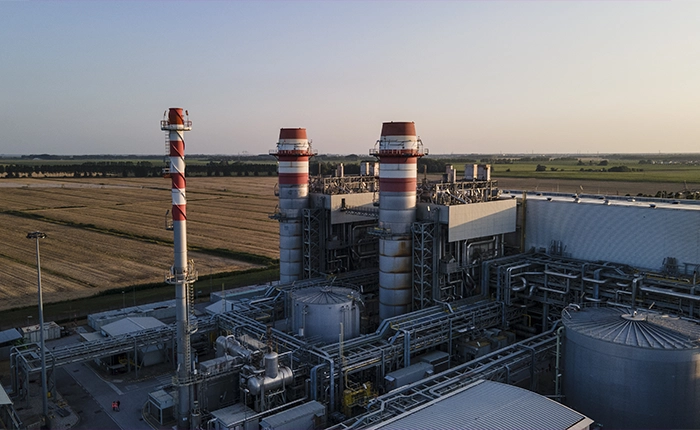
Marghera Levante
Italy’s most efficient thermal power plant
Share
Region:
Veneto
Province:
Venice
Municipality:
Venice (Marghera)
Italy's most advanced technology at the service of the energy transition
The new turbine allows the plant to reduce specific nitrogen oxide emissions by up to 70 percent, and carbon dioxide emissions by up to 30 percent, compared to the average Italian thermoelectric power plant.

€ 400 mln
Total investment for refurbishment of the power plant
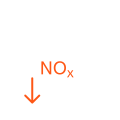
- 70%
Reduction of nitrogen oxide emissions

- 30%
Reduction of specific carbon dioxide emissions

780 MW
The electrical power of the new power plant
Commitment and Responsibility
In 1992 Edison built Italy's first combined gas cycle in Porto Marghera. In 2023 the company inaugurated the first combined cycle featuring a new-generation gas turbine, the most efficient in Italy and among the most efficient in the world.
This history of firsts that has made us more and more sustainable, year after year, demonstrating our respect for the unique territory of the Venice lagoon.
Cutting-edge technology
The new combined cycle plant at Marghera Levante is equipped with a latest-generation H-class turbine, Ansaldo's GT36, which can guarantee efficiency levels of up to 63%, the highest in Italy. The GT36 is also prepared for the use of up to 50 percent hydrogen by volume, blended with natural gas. The plant will supply energy equivalent to the annual consumption of around 2,000,000 households.
Focus on the environment
The plant adopts the best technologies in terms of efficiency and environmental impact, such as the SCR nitrogen oxide abatement system reducing stack emissions by up to 70% compared to the average Italian thermoelectric plant. At the same time, specific CO2 emissions are also reduced by up to 30 percent compared to the national average, due to the plant’s increased efficiency.
Security and flexibility
The plant is designed to be highly flexible, capable of handling the peak demand of 150,000 households with only four minutes' advance notice. The plant can be started up again from any condition in less than two hours.
This flexibility is essential to respond to variations in demand in the face of increasing penetration of non-programmable energy sources, and to ensure the security of the country’s energy system.
An all-Italian supply chain
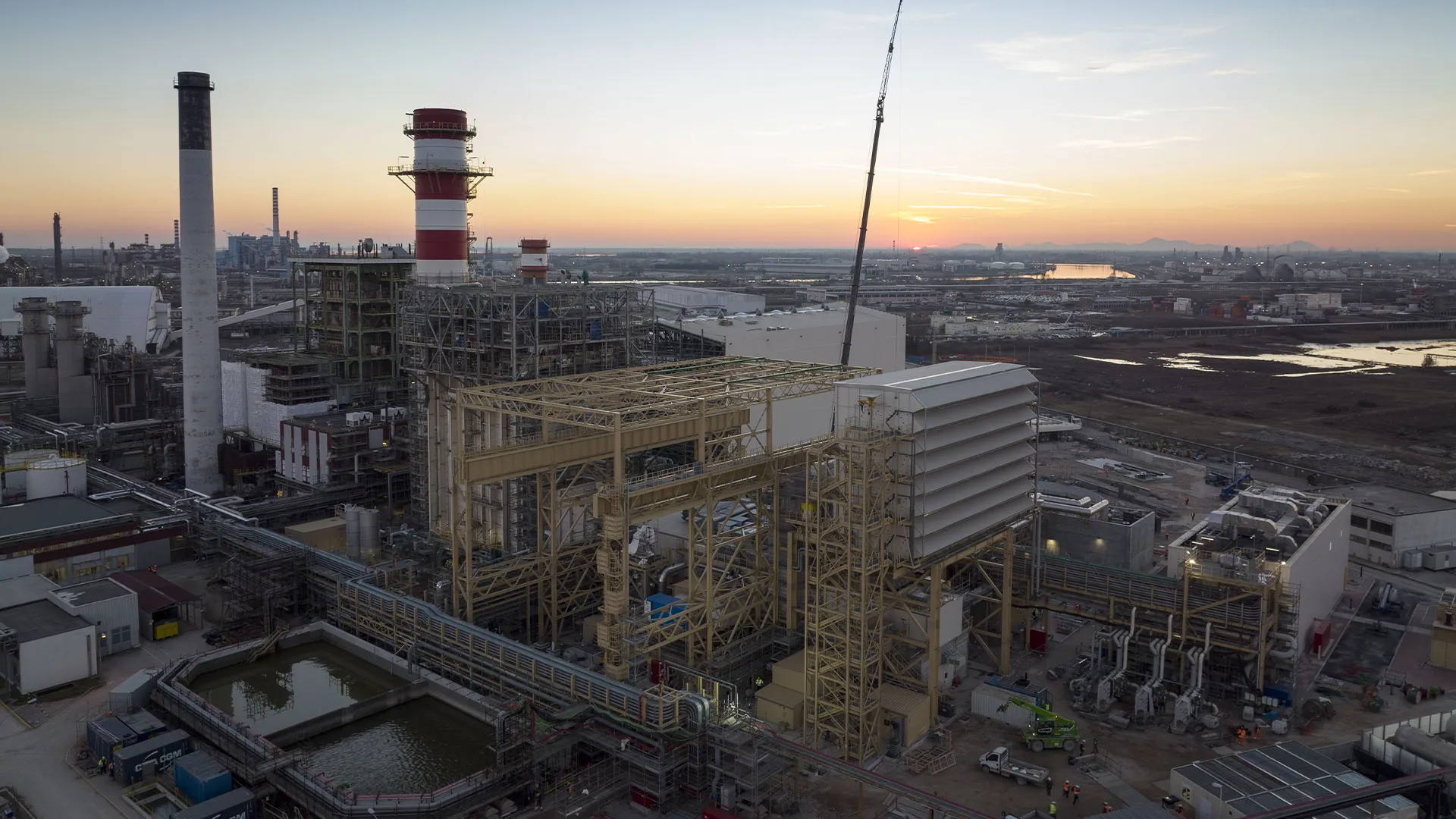
The construction work lasted a total of four years, employing up to 1,000 workers at peak times with 250 contractors, for a total investment of around 400 million euro. The highly complex engineering project saw the collaboration of outstanding experts from the local community and all over Italy.
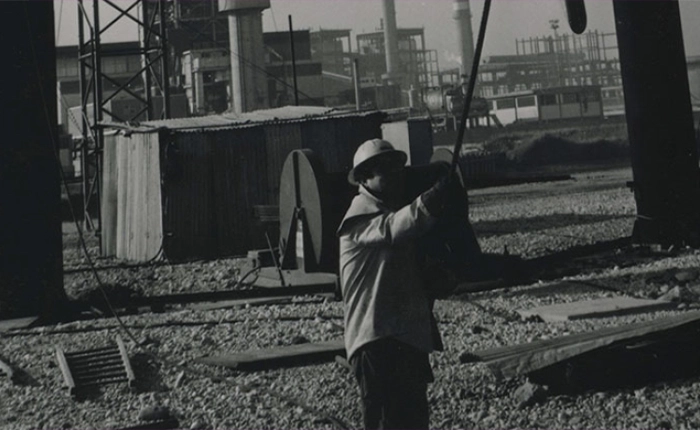
The past and future come together in Porto Marghera
A century of industrial history told through images from the Edison Photographic Archive