New nuclear power
The new nuclear power in Italy
Share
The new nuclear power in Italy for citizens and business: the role for decarbonization, energy security and competitiveness
The study, carried out by The European House - Ambrosetti in collaboration with Edison and Ansaldo Nucleare, aims to examine the scenario of nuclear energy at global and European level, focusing on technological developments and the growing demand for decarbonised electricity. This context makes new nuclear energy an essential component in achieving the climate-neutral objectives set at international and European level. The study provides a detailed qualitative and quantitative assessment of the potential benefits of new nuclear power, analysing the overall impact on the country-system and the positive effects for industry, citizens and local territories.
Nuclear as the leading source of electricity generation in the EU
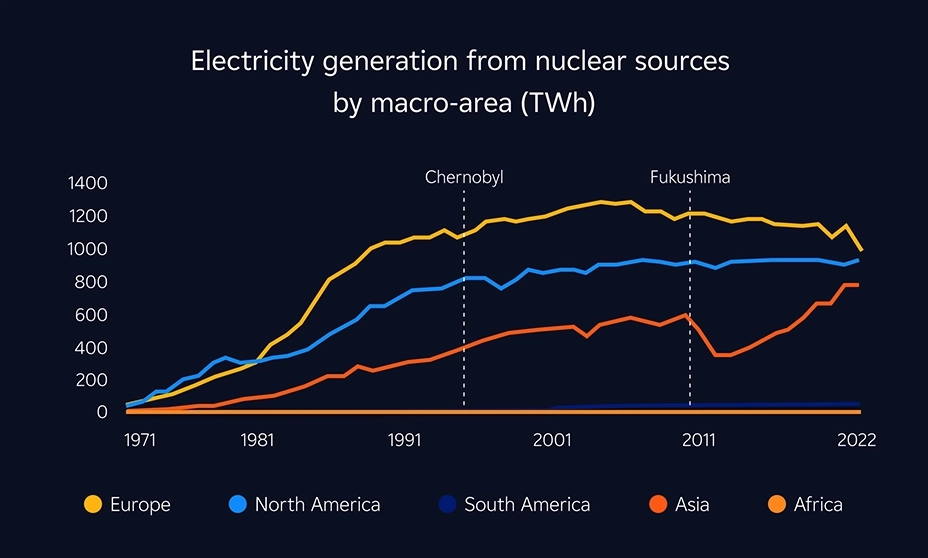
Nuclear production has historically provided a significant share of global electricity (averaging 12.5% of the total over the past 50 years). Although Europe has reduced its share of global nuclear generation, nuclear energy remains today the number one source of electricity generation in the EU (22% of the total), and 11 of the 16 countries most globally reliant on nuclear energy are located in the EU.
The solution to the increase in electricity demand by 2050
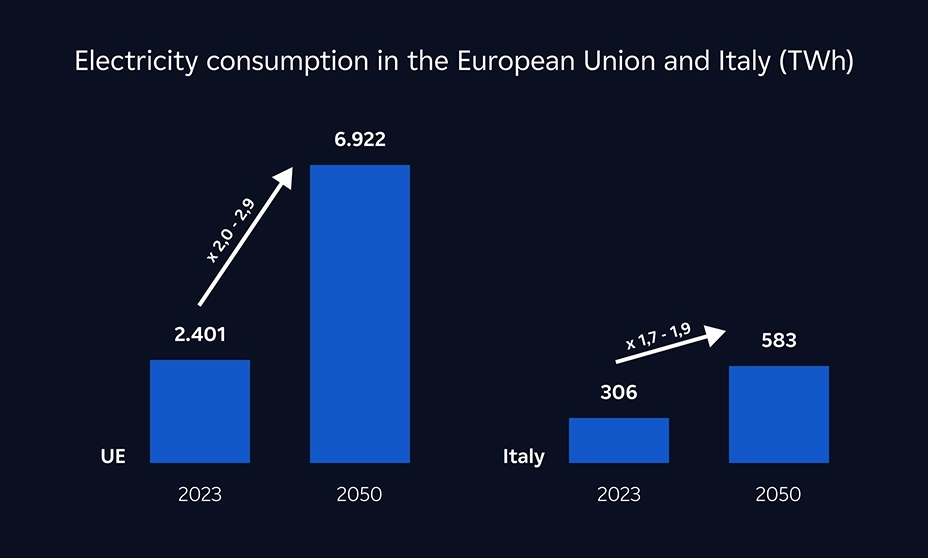
Scenarios at 2050 predict a significant increase in electricity demand, both at the European level (2.0-2.9 fold compared to 2023) and at the Italian level (almost 2 fold compared to 2023), in light of the increasing penetration of electricity in final energy consumption and the rise in computational capacity, driven by new digital technologies. In this framework, “new nuclear” power is a key solution, being the least carbon-intensive power generation technology while ensuring a stable and continuous supply throughout the day.
Nuclear expansion plans in Asia and Europe
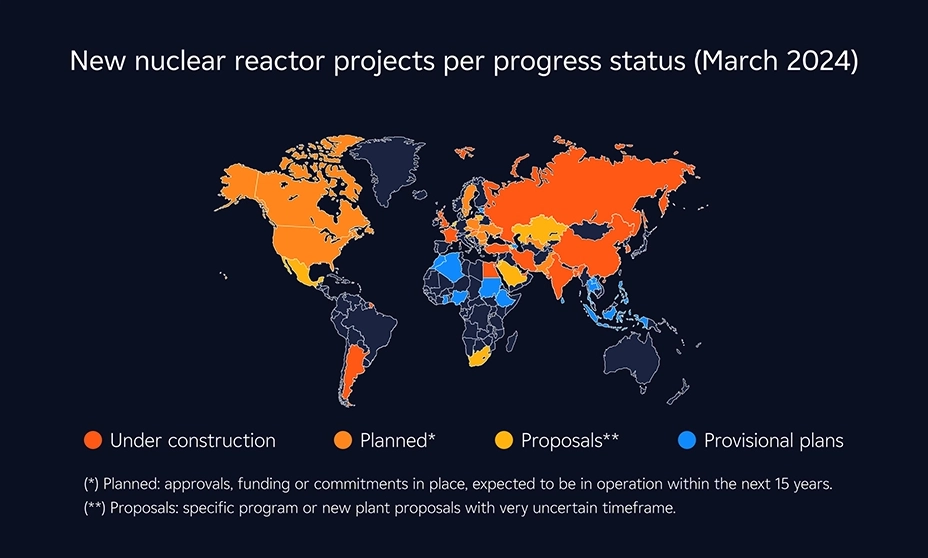
Nuclear power is now experiencing a phase of expansion and a gradual shift towards Asia: Forty of the sixty-one reactor projects under construction in the world are located in APAC countries, propelling this area towards becoming the world's leading producer of nuclear power as early as 2030. In this context, at the European level, 18 countries have planned nuclear energy development projects. New nuclear power - consisting of Small Modular Reactors (SMR) and Advanced Modular Reactors (AMR) - represents a "revolution" for nuclear power development. Amid strong international competition (there are more than 80 projects under development in the world), Europe is taking concrete steps to promote the development of “new nuclear” energy and has launched the European Industrial Alliance on SMRs in March 2024.
Security and strategy for energy autonomy
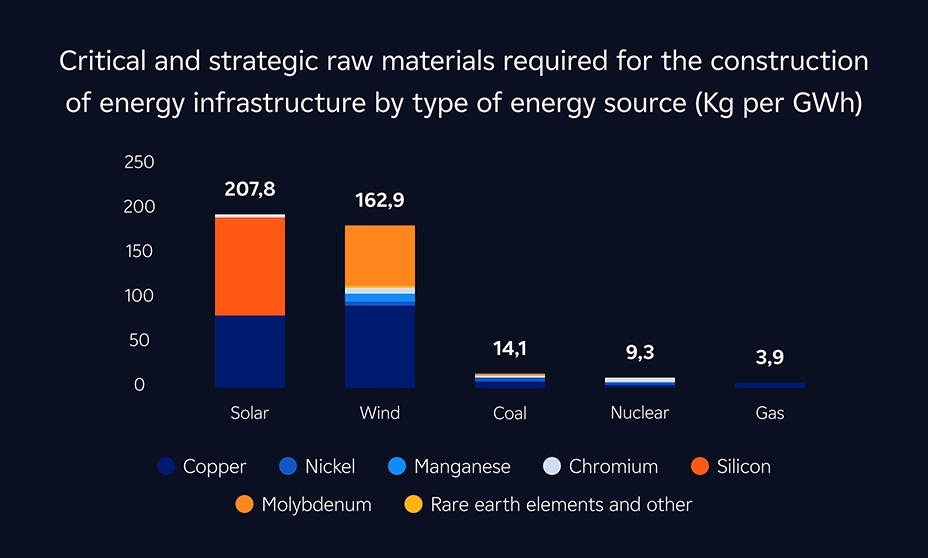
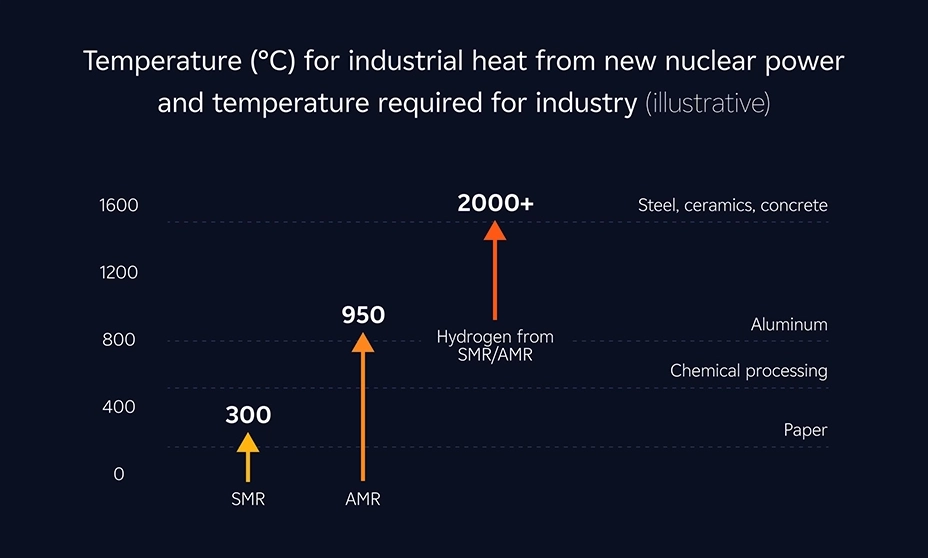
New nuclear power is one of the safest and most reliable energy sources to address the issue of strategic autonomy. Indeed, this technology has a reduced need for fuel as well as a limited dependence on critical raw materials. Moreover, given the EU's prominence in the nuclear industry at a global level, the possible dependence on third countries is further reduced. Energy-intensive industries play a crucial role in the decarbonization process in Italy: in 2022 they accounted for 15% of GHG emissions and 16% of national energy consumption. In this context, new nuclear power emerges as a strategic solution, as it does not produce CO2 emissions during the operational phase, ensures a stable and continuous energy supply and offers multiple applications (electricity, heat for industrial uses and hydrogen).
The key to decarbonization and integrated energy stability
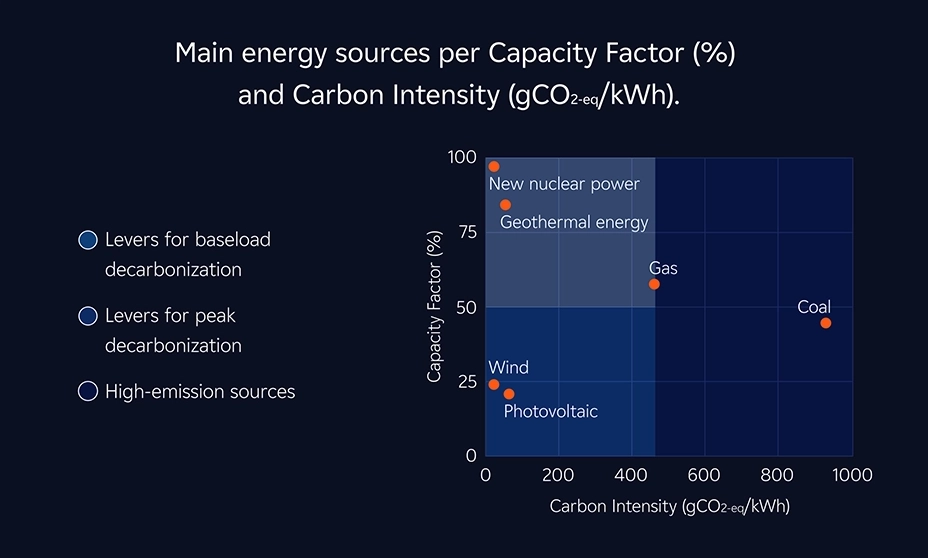
Nuclear energy can play a key role in decarbonization processes. Considering the whole life cycle, it is theelectricity generation technology with the lowest emission factor. Moreover, thanks to its characteristics, it can ensure a stable and constant supply throughout the day, acting as a "systemic stabilizer" alongside the development of intermittent renewables and thus enabling integrated and decarbonized power generation. To promote the development of new nuclear energy in Italy and accelerate the decarbonization process, a clear medium to long-term industrial vision is needed to maximize benefits and savings for end users and the country system and enhance the know-how of the industrial supply chain and research sector in Italy.
Opportunities, local development and socio-economic benefits
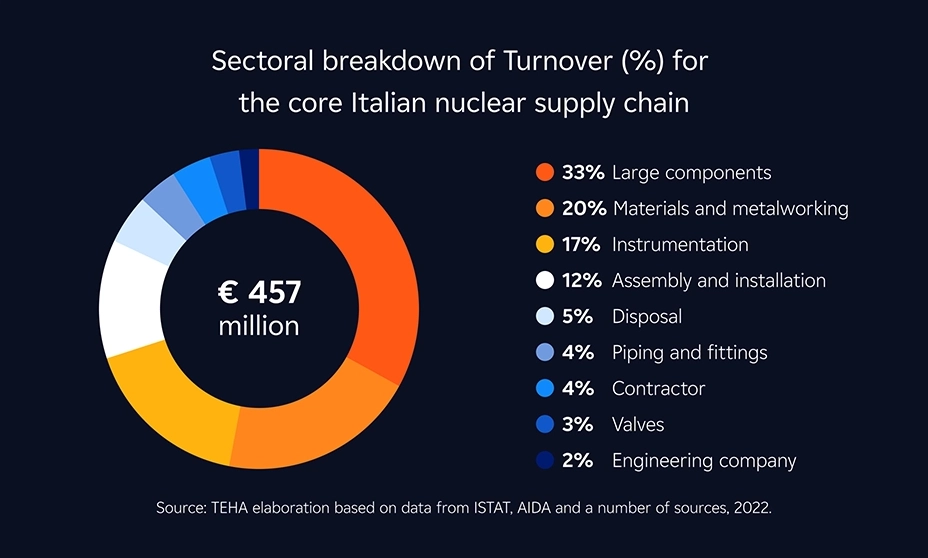
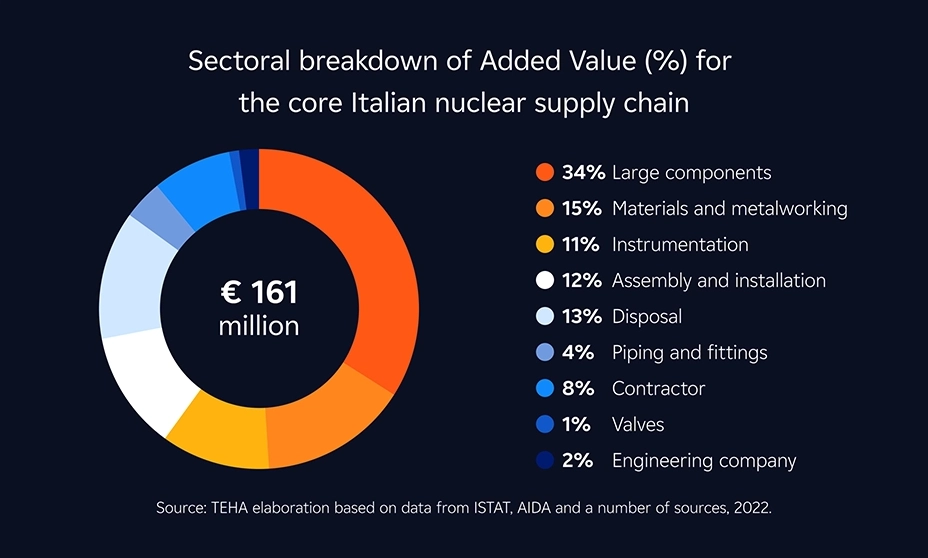
Considering the estimated development scenarios in the European Union (60 GW) and Italy (6.8 GW) by 2050, new nuclear power could generate a potential market of up to €46 billion for the Italian industrial supply chain, with a potential Value Added of up to ~€14.8 billion. Considering also indirect and induced impacts, investing in new nuclear power could activate a potential total economic impact for the national economy of ~€50.3 billion (~2.5% of Italy's 2023 GDP) and create 117,000 new jobs. Nuclear power is a local development tool that brings with it numerous economic and social benefits for the territories and citizens that host it. Moreover, new nuclear power ensures enhanced safety, ease of installation and reduced land consumption.