Carbon Capture and Storage
We invest in innovation and decarbonization
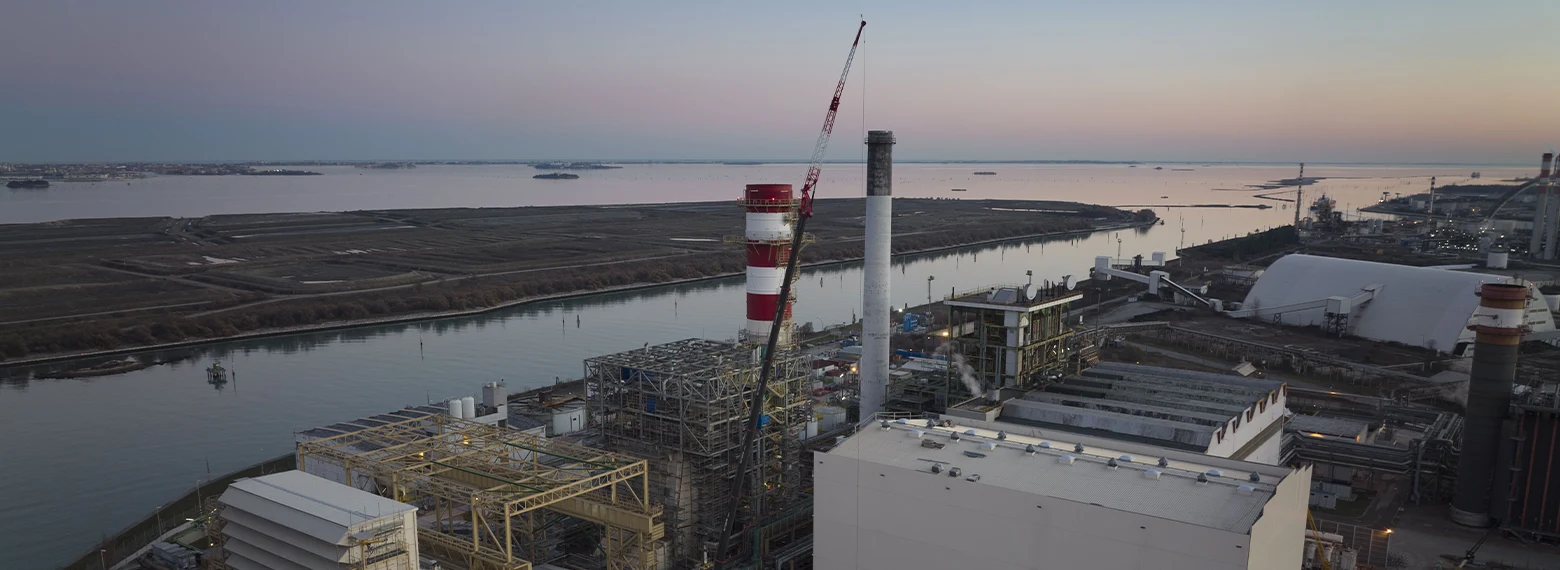
A few years ago, we bet on the first H-class combined-cycle thermal power plant in Italy and built the most efficient plant ever. Today, we continue to innovate for decarbonization, evaluating the most efficient and safe CO₂ capture processes
Technologies to Reduce Emissions
Carbon Capture allows for the capture of nearly all carbon dioxide emissions directly from industrial plants that generate them, enabling storage in natural cavities, such as depleted hydrocarbon reservoirs.
Investing in Carbon Capture will allow us to achieve our goal of significantly reducing emissions from combined-cycle thermal power plants, both new and existing, within a defined and near-term timeframe, while minimizing the impact on their efficiency and flexibility.
Investing in Carbon Capture will allow us to achieve our goal of significantly reducing emissions from combined-cycle thermal power plants, both new and existing, within a defined and near-term timeframe, while minimizing the impact on their efficiency and flexibility.
How Carbon Capture Works
We are studying, based on the specific sites of our thermal power plants, the most efficient and safe processes for capturing carbon dioxide. The goal is to intercept and isolate it through absorption processes. At Edison, in particular, we focus on technologies that wash the exhaust gases, capturing up to 95% of the CO₂ that would otherwise be released into the atmosphere.
What Happens to CO₂ Once Stored
Instead of releasing carbon dioxide into the atmosphere, we capture it and transport it through underground pipelines to natural reservoirs that have contained gas or oil for millions of years. These are stable geological sites with the necessary porosity and permeability to safely store fluids, including carbon dioxide. Additionally, these storage sites are constantly monitored to track the behavior of the CO₂ over time and ensure the safety of its storage.
Decarbonization and Energy Security
For the energy transition to succeed, it is crucial to complement renewable energy production with dispatchable sources, such as thermal power plants, to meet the energy needs of businesses and households when renewable production is unavailable. While we explore new decarbonization technologies, such as advanced nuclear and hydrogen, our combined-cycle gas plants ensure efficient, safe, and flexible energy for the national electricity grid.
Why Carbon Dioxide Sequestration is Important
With carbon dioxide capture, we aim to take a step further and contribute to decarbonizing our gas-fired power generation portfolio. Our ambition is to achieve 90% decarbonized energy in our portfolio by 2040.
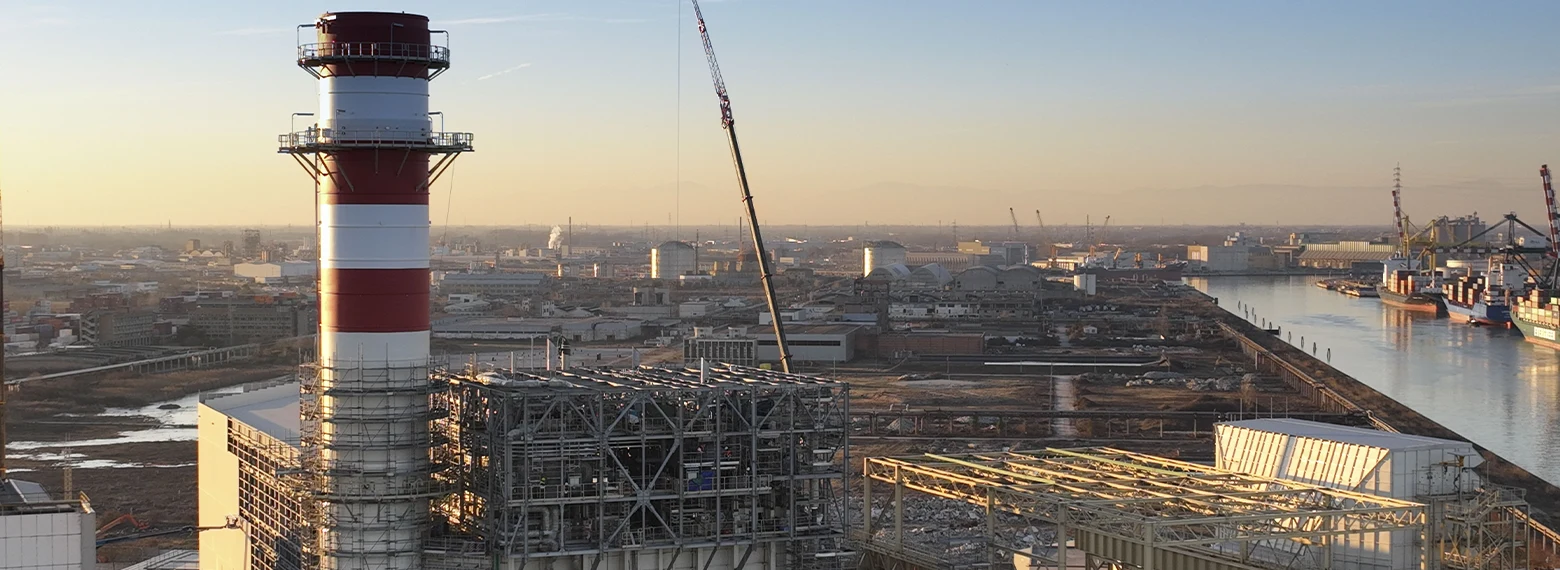
Planting trees is also a solution, and we are doing so by participating in the Mosaico Verde project. However, carbon capture and storage (CCS) in industrial applications can absorb much larger volumes of CO₂. For example, in one year, a CCS plant at our Marghera Levante facility, one of our most efficient plants, could absorb as much CO₂ as 100,000 hectares of forest, equivalent to 1,000 km² (roughly the size of the entire metropolitan city of Milan).

1,000 km²
Forest area roughly equivalent to the size of the entire metropolitan city of Milan.